Sunday, January 20, 2013

Last Two Meetings Detailed, and Chance to Query MPC Planner Monday!


Remember that MPC Planner and Shreveport Master Plan Implementation Director Dara Sanders is speaking to ABS on Monday 21st, on MLK Holiday (see the post below this one for details).  What follows here are some overdue notes:


Back on January 7th, Maurice Loridans, Debora Allen Demaree, Loren Demerath, Cynthia Keith, Lani Duke, and Chris Chandler, discussed some of the topics the group might address this spring.


RADIO SHOW EXPANDABLE

Loren is enthusiastic about potentially expanding the radio show to feature conversations with faculty about ideas they’ve been teaching or researching, partly as community outreach of Centenary, but also as a means of improving Shreveport quality of life by offering that kind of radio to the city.  The main purpose of it would be to share ideas with those outside the campus, or a given classroom, lab, or personal study!  There’s some cool stuff that faculty know about, are working on, and wouldn’t mind sharing.  Dr. Ed Ragan, is a Ph.D. in History who might be an optimal co-host for those kinds of shows.  The shows could also be preserved as a resource in the form of podcasts.


ABS CAPACITY EXPANDABLE VIA GRANT FUNDING

Debora has been a welcome addition to the group recently, and shared her knowledge of grant funding that might be available to a group like ABS.  The group discussed how money from the oil spill is being used by Shreveport organizations.  Also, Lani mentioned that USDA funds are available to help connect consumers with farms; so with through a food coop there may be a way to access USDA rural development. 


FARMERS MARKET EXPANDABLE?

Kevin Kennedy is a former Ruston resident who has said Ruston’s market beats Shreveport’s by a mile.  The group mentioned what a great job Kip Holloway, and especially Noma Fowler-Sandlin have done with the market, but that it seems hampered by its location in the sense that festivals will always close it down for those weeks.  It was also questioned whether the market could remain open over Shreveport’s mild winter; there are other markets in Louisiana don’t close during that time. 


It might be that Shreveport’s market could be enhanced with funding that could help it establish a regular market up around Texas Avenue.  It was wondered if it might work where the Makers Fair is, but Maurice mentioned that company does use the parking lot M-F.  The Shreveport Commons group has the idea of moving them as well.  The moving force there is the arts going on in that area; a lot of which is David Nelson and Minicine and TACA; the Commons wants to put condos across from Minicine and next to the House for Hope.  SHRAC has asked us to help them in the sense of identifying what people like us would want to live down there, and a farmer’s market is a start.  Shreveport Organics is a form of a food coop, though you don’t get to pick.  There, you pay a monthly fee, and it was noted that it’s best to share your membership with a neighbor.


Liz Swain has said there’s a store coming in to downtown, and having Liz as a guest again at one of our meetings and/or on the radio is something we’ve been meaning to ask her about.  ABS sure supports the mission of the DDA, and thinks Liz has done an admirable job.


JANUARY 14TH MEETING:


The next week, Maurice Loridans, Kathryn Brandl, Loren Demerath, Cynthia Keith, Lani Duke, and Feico Kempff discussed Mardi Gras’ “Cyclovias,” new local microbreweries and wine vinyards, a dog park spied inside a mall, misperceptions about Shreveport’s dog park funding, and what the city is doing about our need for new zoning codes.


CYCLOVIA

It was noted that Mardi Gras is coming early this year: February 2nd and 9th will be the parade days.  Loren and Carolyn describe the “Cyclovia” on the radio show that day: how the blocked off parade routes make an ideal bicycling excursion, visiting with folks along the way, and just seeing the sites of ArkLaTexans out picnicking and getting ready for the parade.  Maurice and his wife Valerie have dressed for the occasion previous years, and the possibilities for bike decorations are endless!


LOCAL BREWING EXCELLENCE

We discussed local brewing excellence, and the unique tastes one can only get through micro/home brewing.  Kathryn’s award winning winter ale is but one example.  Word it there will be two mirco-breweries that will produce beers on site coming to Shreveport.  One of them believes they’ll be open in the summer.  Now word on where they’ll be yet.  They’re probably tight lipped on that until the paper work is done.  Maurice noted that Pensacola, Florida has more micro-breweries than we do, and they’re quite a bit smaller.  


DOG PARKS IN MALLS?
That led to the comment that a number of cities have more amenities than us, like dog parks, which are common elsewhere.  Kathryn was in San Diego at a mathematics conference and happened to be walking in a mall.  There, lo and behold, she saw a dog park, right in the middle of the mall!


ARKLATEX VINYARDS?
Cynthia noted we have a winery and vineyard coming on Greenwood Road.  There’s another one called “On Cloud Wine” on Bunkham Road.  They’ve planted a bunch of muscadine and are waiting for them to produce.  They’d been bringing in grapes in the meantime, but you have to producing a certain percentage of your own grapes to be a considered vineyard.  

Maurice noted that the wines that Arklatex locals tend to make are with muscadine grapes and tend to be sweet.  That said, Maurice has tried a friend’s blueberry wine that he reports was “quite dry and sophisticated.”  Kathryn’s grandmother used to make wine but not out of grapes: choke cherries, raspberries, plums, etc.  She said she didn’t know how to warn people about the type it was when they were offered it--that it isn’t wine like they’re used to thinking. That is, until her grandmother would say, “I like it with a little bit of 7-Up.”  Then they’d know! 


DOG PARK FUNDING MISPERCEPTIONS

It was noted that The Watchdog section of The Times commented on recent tweets of the Mayor related to the dog park.  Someone tweeted there are things we need more.  Cynthia asked what they might be, and this person said, “gymnasium floors.”  Feico noted that that kind of thing is already covered by the bond election. Another person tweeted "education", and Cynthia noted that that’s something we’ll be busy with for a while, but has nothing to do with the money funded for the dog park.  People aren't understanding this money can only be used fpr riverfront recreation. 


It was noted that many people don't realize the funding includes more than just a dog park: it provides getting drinkable water there which makes it a more useful public gathering area for all people, dog owners or not.  Feico said he avoids calling it a "dog" park because it serves people.  Cynthia said Pam Atchison of SRAC visited her mother in Euless TX, where she is mayor; while there she showed Pam their dog park. Pam went on about it how great it was for pet owners to socialize, she focused more on the people than the dogs! She said she now gets it! Pam said she realizes now that the preliminary plan for pup park in the Shreveport Common may be too small.  They see now how it can be popular and a big draw for people, and a larger dog park can give the Common more bang for the buck.  Their current plan is to position it on the Texas Ave. side of the railroad tracks.  
Cynthia’s thinking has been, that if we can start building the one at Hamel Memorial Park, we could start on one at Princess Park.  


Unfortunately, the Mayor’s lack of action is holding up donors and volunteers.  If people give in to waiting out the last term of Mayor Glover, it could be four years--two years AFTER the next mayor takes office that the park gets constructed!  


Councilman Michael Corbin said all parties should sit down and revisit the dog park issue.  The Mayor hasn’t said explicitly what the greater priorities and needs are, and it may be hard for him to say since this is money that HAS to go to riverfront improvements.  People don’t understand that when they talk about roads, schools, and other parks being greater priorities--it can't go to those things--but the Mayor hasn’t corrected people on that misperception. 


It was noted that it seems odd that the Mayor accepted funding from the Red River Waterway Commission for Riverview Park, but has turned down funding for Hamel Memorial Park.  The Mayor got the half million dollar bathroom and half million dollar stage cover he requested.  But at Hamel’s there’s nothing, and the dog park funding is less than half the cost of either of the Riverview Park projects, and has been supplemented by thousands of volunteer hours, signatures, and dollars in private donations.


But, ABS is trying to stay optimistic something will be worked out.  We know Mayor Glover can be a creative problem solver, and we trust that he has the best interests of Shreveport at heart.
 
CHANGES IN ZONING CODES—AT LAST?

The group is looking forward to Dara Sanders serving as our guest-speaker at our meeting on Monday the 21st, on Martin Luther King Holiday.  We hope she’ll be able to shed light on what the city is planning on doing to address the need in revising our zoning codes, a need established in our approved Master Plan. 


There was an article in the paper recently, that, it was noted, wasn’t particularly informative.  That said, it appears they’re going to hire a consultant to do a study to make recommendations for zoning changes.  However, one the things that’s been noted by ABS (and TO ABS) is that there’s tendency in city government to use more expensive outside consultants than in-house people.  It’s been said that the pattern may be caused by self-interested motives, as it gives people bigger budgets to work with.  One person noted that the first thing the consultant will do is get a feel for what people want.  Another noted: “It’s consensus shoving again.”

Feico said he thought the use of consultants is due to a lack of staff.  They get squeezed down by taxes being cut that would otherwise fund more positions.  Loren speculated that this means the city is forced to go the expensive route for consultants because we’re not willing/able to pay for a full planning staff, a bit like how it’s always cheaper to own than rent, if you can afford it.  Feico noted that if our city government weren’t based on a strong mayor system, the MPC would develop a staff focused on planning, instead of doing just want the mayor wants.  Maurice said it’s a piecemeal approach, each zoning case responding to developers, religious leaders, etc., on alcohol sales (a bulk of their work).  It’s having a tenured MPC Board as opposed to two year terms appointed by the City Council or the Parish Commission.

Maurice noted that the other significant portion of MPC’s work is code enforcement issues is generated by complaints by neighbors.  Feico said they have special officers devoted to code compliance in middle-to-low income neighborhoods.  An example at the other end is how there’s been an argument over a commercial development on Ellerbe Road and local residents have been against it because of wanting keep the trees in the area.

BOARD MEMBERS REMINDED TO RENEW MEMBERSHIP THROUGH BOARD DUES

Feico reminded people to pay their annual board dues of $40.  Loren received approval of the board members present to be reimbursed for the hotel room he paid for (though not meals and gas costs) when he was asked to go to Baton Rouge last month to observe the greenway design presentations

Friday, January 18, 2013

Dara Sanders, Urban Planner for the Metropolitan Planning Commission, and Head of Master Plan Implementation to Speak at ABS Monday

Dara Sanders, Urban Planner for the Metropolitan Planning Commission, and Head of Master Plan Implementation, is scheduled to speak at ABS Monday.  Dara will be updating us on where the city and parish stand in it's implementation of the Master Plan for Shreveport.  

Dara is a veteran planner who's previous work in Fayetteville, Arkansas helped raise quality of life through nature trails and bike paths, as well as rezoning to allow a better use of space for the city.  

Dara knows all about "smart growth."  In ABS' view, "smart growth" is the difference between letting a city grow into a sprawling, wasteful, and unfulfilling place to live, and controlling that growth, shaping it into a place where people come to live because of the quality of life such a place provides.

Come Monday to hear how we can all help Shreveport grow intelligently!

As always, we'll meet 6:00-7:00 in the Wright Math Building, across the street from Magale Library on Woodlawn, two blocks up from the Gold Dome on Centenary College's campus.  Join us!

Last two meetings move ABS forward

The last two meetings have moved ABS forward.

First, two weeks ago, Debora Allen Demaree offered to partner with Loren in applying for funding to further some of the projects ABS has been promoting, and with increasing ABS' capacity overall.

Then, at last week's meeting, members discussed ways the group could advance the Dog Park, and help publicize the home made "culture" of things such as a new microbrewery (two, even?), and a new winery.  

But that just scratches the surface.  Stay tuned to this space as Loren catches up fills in more of the details from his notes.

Friday, January 11, 2013

Greenway Proposals Discussed and Action Items Developed at Holiday Party - End of Year Meeting


ABS ended 2011 with a bang, holding a holiday party at our last meeting while reviewing the proposals for Shreveport greenways that had been developed by graduate students down in Baton Rouge at the School of Landscape Architecture in a class taught by Dr. Bruce Sharky, former director of the school (which, by the way, is the number one such school in the country!).

In attendance: Dara Sanders, Feico Kempff, Ian Webb, Jerome Nicholas, Matthew Linn, Lani Duke, Cynthia Keith, Loren Demerath, Susan Keith, Jack Waterman, Jon Soul, Brian Salvatore, Wendy Benscotter, Anna, Maurice Loridans, Carolyn Manning

A number of people said how impressed they were by the proposals.  (A few others mentioned they weren’t able to download such large files, so Loren will be working to post them and make them more accessible through the blog.) 

The following points were among those made as the group discussed the proposals:

Ian Webb noted that students had no preconceived notions of boundaries or budgets, and that they’re worth reading to get your mind going on what could be possible.  Making a network of paths that connect amenities would clearly increase our city’s value.  Jerome noted that the students were looking at “desire lines,” which allowed them to see the forest for the trees.

Matthew said we could put a pathway down Ellerbe Rd. if the physicians who’ve been hit on their bikes were organized.  The Parish would have to maintain an insurance policy in case someone fell on their land.

Dara said one could look into extending a path based on just slight modifications to utility easements, and we can find out from the utility companies where the easements are. Loren reminded the group of ABS’ meeting with Director of Operational Services Mike Strong some years ago (before his retirement), when he said it should perhaps be a policy for them to put a path over any easement they happen to have to dig up.  Dara noted it would be interesting to overlay some of these desired connections over our drainage ditches.

SHREVEPORT IS IN THE BEST POSITION ONE EXPERT HAS EVER SEEN

Loren recalled how when he and Ian visited Baton Rouge to see the students present their proposals, Dr. Sharky said that the draniage ditch width made our situation the best he’d ever seen in making for cost-effective conversions to greenways.  He also said folks here have no idea how it will change their city.  Loren and Ian had mentioned that that might be part of the problem, and Sharky responded that city officials should take to trip to Anchorage, Alaska to see how greenways can so significantly raise a city’s quality of life.  Ian noted that just that day there was a guy his shop who’d just come from Anchorage and was raving about the greenways there.

It was noted a letter we’ve received from State Senator Barrow Peacock, as well as previous contact we’ve had with Senator Landrieu’s office, indicate that both are our allies in increasing quality of life through nature trails and bike paths and making the city more walkable and bikeable.  Senator Peacock’s letter congratulated us on the money we’ve raised and asked for bike path to stay integrated into the dog park plan.

Ian noted James Mann et al.’s use of the railroad right of way; that’s an active line that goes through Festival Plaza, but active lines are commonly used as the basis for greenways; there is apparently sufficient width and space there; Kansas City Southern owns that track, as well as the bridge that goes across the river by Festival Plaza.

RAILS-TO-TRAILS A RESOURCE

Dara noted that the Rails-to-Trails Conservancy specializes in this sort of thing.  Loren noted that Shreveport has several connections to Rails-to-Trails, including native daughter of Shreveport, Lindsay Martin, who now works high up in that organization in D.C.  (Loren has had contact with Lindsay, who has shared ABS contact info with a Jason Tudor, a person who works on the outreach team for AARP’s Livability Initiative in Louisiana and is interested in doing some bike/ped-related work in Shreveport.)   Dara also noted we can also see what legal approaches other places within Louisiana have taken.  Dara said she can see how a lot things need to be put together from her perspective as the Master Plan Administrator.

Matthew said the Parish is forging ahead.  It’s spent money on bicycle paths, and has some left over to go by two other parks.  It will be 36 miles to loop the parks.  Every so many years the Parish does street improvements, and when they do they’ve been doing it more cheaply and reserving the saved money with these kinds of improvements in mind.  The ultimate goal is go to the south side of parish where Cimp Haven is located.  There’s also hope for developing land acquisition with federal monies.

Dara noted that from the Master Plan standpoint establishing a greenway plan is important because it helps establish everything else.  We can construct connections with grant funding.  If our codes are written correctly, we can ask the private sector to help establish the network.  Dara said it’s like putting together a puzzle, and to help that, we could take some of desired connections and overlay them over the data that we have.

I-49 QUESTIONED

Brian asked about the Master Plan’s position on the I-49 connector.  Dara said it doesn’t really speak for, or against it.  The Plan talks about livability; but we don’t know if the connector is warranted; if it is, we’ll have to be sensitive in its design to not cut that neighborhood off. Jerome noted there are ways to mitigate that.  It was also noted that some cities are simply prohibiting interstates.

Speaking of the I-49 corridor, Brian said he was doubtful that NLCOG has given public health due consideration in its push to build the freeway through the heart of the city, and that this year the World Health Organization classified diesel soot as a definite carcinogen.

Matthew said there appear to some people supporting it for private gain.  (Loren labeled that as immoral if they’re aware it’s also against the public good.)  But Matthew said it doesn’t appear to pay off.  Buying the property needed for would be over 1 billion dollars.

ACTION ITEMS INCLUDE ADDRESSING GOVERNMENT BODIES

As Loren asked about action items, it was noted that we should get together with the Parish and City Council and see if they’d support a greenway plan and see what their methodology would be; ABS has the ability to bring it to the public, through the blog, the facebook page, and the weekly radio show.  A question for city government officials is whether they would support MPC and the Parish taking it to public and working with the public to craft something it supports.  Perhaps ABS could ask to speak to the City Council, to the Parish Commission, and to the Metropolitan Planning Commission (who’s purpose is facilitate discussion between the city and parish governments).  ABS could then present some samples of Shreveport greenways from these proposals, and ask those officials to consider supporting the effort to develop some kind of greenway plan for the city.

It was noted that the public meetings for each of those bodies have a public comments section.  Even better, ABS could be sponsored by someone like Matthew or Jeff Everson for a particular spot.  We also might want to meet with Ken on the 8th floor, and work with the city through Rose McCullough, who’s excited about these things.  We could speak to the Master Plan Committee. 

COMMUNITY FOUNDATION

Dara asked if ABA would be interested in helping the Community Foundation with collecting information the use of busses and bicycles.  The Foundation has been requested to get information and need to decide which 20 locations they should select for frequently used bus stops, etc.  Dara asked if we would feel comfortable providing feedback to the Foundation, and the group responded it would.  Next month ABS will begin thinking about key locations.  The Foundation is working with Dr. Hawkins at LSUS.

DUTCH DIALOGUES

Tulane architecture student and Magnet High grad Jack Waterman mentioned that the “Dutch Dialogues” going on New Orleans is an interesting process of looking at the Dutch model for increasing quality of life while "living with water."  We wouldn't be the first to put our drainage ditches and levees to better use!

Monday, January 7, 2013

First Meeting of 2012 Tonight!

Our first meeting of 2012 will be tonight, Monday the 7th, 6-7 p.m. in the Wright Math Building, as usual.

We'll discuss the dog park's progress, noting the wonderful success of yesterday's fundraiser at Sciport!  Congratulations Cynthia Keith and to all those who helped organize it!  And big thanks to all who came and contributed!

Tonight we'll discuss our agendas for the year, and that could cover the usual projects, but other new ones too.  Come join the board members of ABS and contribute your thoughts!

The Wright Math Building is right across the street from Magale Library, on Woodlawn, two blocks up from the Gold Dome on Centenary's campus.

(And by the way, Loren's deadline for a conference paper he's submitting is Tuesday, and he promises to update the blog with the last meeting's summary by Thursday.  Thanks for your patience, if you've been waiting.  What a great meeting and holiday party it was!)

Thursday, December 13, 2012

This Monday Night: Shreveport Greenway Proposals and Holiday Party!

Yes, two good reasons to come to the ABS meeting Monday night.  Here's the story:


Dr. Bruce Sharky
ABETTERSHREVEPORT GOES TO L.S.U.: As some readers of this blog may recall, Loren Demerath was requested by Dr. Bruce Sharky (an expert in greenway design) to attend presentations of greenway proposals for Shreveport.  Previously, Dr. Sharky had been alerted to the interest in Shreveport Greenways by the National Park Service, and through the grant won by ABS to work with the NPS to the end of creating a master plan of greenways (which, by the way, can be any combination of nature trails, bike paths--great for healthy transportation, as well as fun recreation).  Accompanying Loren to view the presentations in Baton Rouge was Ian Webb, a founding member of ABS, as well as one who's had experience in creating a network of greenways in Roanoke, Virginia.

         Dr. Sharky pointed out that the following proposals and materials haven't been gathered together to create an overall narrative and full plan.  The students completed this work in one month as part of a class, and there is work left to be done to create something with fuller impact.  We're hopeful that could be done by finding funding for a graduate student to work on that task during the spring semester.  The NPS intimated they could help with that but haven't gotten back to Dr. Sharky about it yet.  

a new drainage canal greenway in Anchorage
SHREVEPORT'S SPECIAL: Maybe the best part of the whole trip was hearing Dr. Sharky tell us the following: he's seen lots of drainage canals over his career as a landscape architect of greenways, but he's NEVER seen a city with such easily convertible canals as Shreveport has!  He said it would make construction of greenways more affordable than it has been elsewhere by an order of magnitude!  Dr. Sharky also said, Shreveporters "have no idea how this is going to change their city." To get an idea, he mentioned they might visit Anchorage, Alaska, the site of a recent renaissance due to greenways.

        But certainly this work has a lot of value that can be developed much further--and isn't that just what we'd say about our city? Links to the proposals and miscellaneous materials are below.  We hope you find them as inspiring as do Ian and Loren.
sample of the work showing bayou-crossing difficulties

Proposals:
by Li Wang
(500 MB, but worth it: a full plan for the southeast side to leverage the existing bike paths and provoke demands for similar facilities throughout the city)
by James Mann et al.
(6 MB, an easy loader with big downtown relevance; along Cross Bayou to the north, and aside a forested railway to the south)
by Xueyao Wei
(122 MB, but again, worth it: the marketing of Shreveport through the artistic representation and design of our city; check out that bridge!)
Other materials:
categorization and documentation of drainage canal types (wow!), some potential routes, a greenway plan along southern Fern Ave., the route and programming, analysis of city vegetation, sites from Columbia Park to Querbes.
       So, if you're interested in discussing these, join us at our holiday themed meeting Monday evening at 6:00 in the Wright Math Building.  Bring your own beverage and/or a nibbly to share, or just yourself.  We'd love to hear your thoughts on these proposals and how to move them forward.

Saturday, December 8, 2012

Bus System Improvements, Public Space for Street Art, Free Exercise Classes, Targetting Obesity Among Student Proposals Presented to V.I.P.'s Last Week


We held the second of three special ABetterShreveport meetings Monday that feature Centenary students in Urban Sociology presenting their proposals for, well, a better Shreveport!  We made special invitations to few government officials and community leaders we thought might be interested and able to give useful feedback.  Indeed they did!


In attendance: Gregory Free, Wendy Benscotter, Feico Kempff, Cynthia Keith, Maurice Loridans, Dara Sanders, April Dahm, Catherine Kennedy, Victoria Provenza, Carolyn Manning, Brian Salvatore, David Nelson, Stephanie Evans, Quincy-Allen Jones, Jordan Pope, Kedrick Williams, Victoria Luraguez, Deborah Allen, Mariah Pitre, Don Adley


A BETTER BUS SYSTEM
Stephanie Evans presented first on her proposal for an improved bus system.  Stephanie noted the benefits of public transportation, Sportran’s successes thus far, and improvements that would be possible based on what’s worked elsewhere.  Among the proposals is for an app that would show the routes.  (The specifics of that app were developed by fellow student Don Adley.  It was part of Don's participation in NODE, Centenary's living learning community focused on technology and social change.)  Other suggestions were for LED lit bus stops with posted schedules, and pamphlets with schedules funded by advertizing.  Stephanie cited the examples of Modesto, California, and Oklahoma City that have implemented such things.


Bus stop signs now used in Seattle (from The Transportationist.org)
David Nelson suggested the app could use GPS trackers on buses to locate their position, and someone else said they believed the buses are GPS equipped. 


Victoria Provenza noted that there’s a stigma against public transportation in our city (and others like it, no doubt).  Dara Sanders noted that it’s seen as tranportation welfare.  Valerie 
McElhose, Assistant Manager of Sportran as Sportran, as well as Director, Gene Eddy, were referred to Stephanie as contacts.


USING PUBLIC FUNDS TO TARGET OBESITY
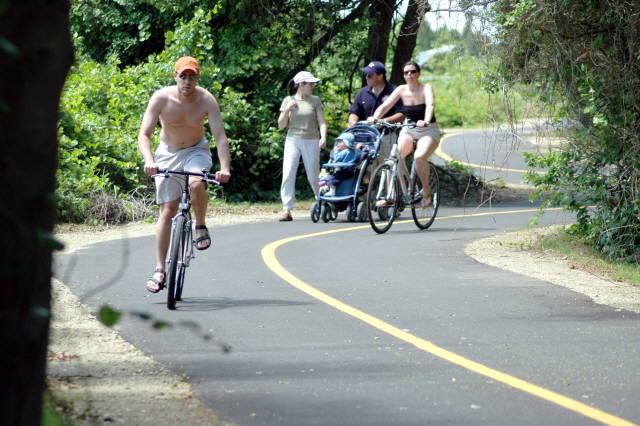
Adding multi-use paths can help lower a city's obesity rate
Victoria Luraguiz then presented on how we might reduce obesity through a wise application of public funds.  Among her proposals were mass media campaigns on the causes and treatments of obesity, and investment in creating appealing network of nature trails and bike paths to use for transportation. 


Deborah Allen commented that low income people are targeted with cheap, high calorie food; Gregory Free noted the limited options such people have in the typical convenience stores common in such neighborhoods.  Loren said the Highland area where the Centenary campus is has been officially designated as a “food desert” because of such characteristics.


PUBLIC SPACE FOR STREET ART
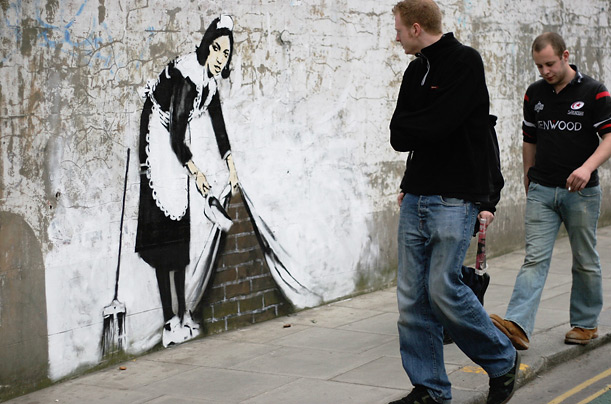
Street art by Banksy in London
Kedrick Williams and Jordan Pope presented a proposal for an outdoor gallery and public space for street art.  They said the art can be graffiti, stenciles, pieces using wheatpaste as the medium, or posters using a grid layout, or stickers.  Kedrick and Jordan showed examples of the work of such famous street artists as Sheppard Ferry, Banksy, and David Cho.  Kedrick and Jordan also showed pictures of an area devoted to street art in Austin, as well as interviews with out-of-town families who were enjoying visiting it as an interesting feature of the city.


Gregory noted that his office in Austin is very near the area they describe.  He pointed out that monitoring what would be too offensive to allow can be difficult.  Kedrick and Austin said that they would suggest using practices that have been successful elsewhere in dealing with such issues, such as having artists register.  It was noted that it would encourage artists to consider how they might take responsibility for the social consequences of their public art.  Victoria Provenza commented that the Crewe of Highland has done that, in effect, in deciding to ban the symbol of the rebel flag for the highland parade, but leaving it up to individuals and groups to decide how to operate within that constraint. Gregory noted that elsewhere similar ideas have been proposed, such as having a giant easel, open picture frame, and pedestal, all available for performances or exhibits, though there would be a jury process involved.

Jordan and Kedrick also presented a shipping container mockup showing how such a container could be used as the exhibition and creation space, while also helping to anchor a point on a bike trail.  Shreveport Common was also described as possibly an optimal location for the space. Catherine Kennedy said she’d wanted to have art installed downtown in spaces that need improvement. Wendy Benscotter noted that this proposal had already been passed along to the Shreveport Common Public Art committee.   


Dara Sanders said those containers to meet the criteria to be considered as “structures” and so would have to meet the regulations that go along with that, but did not intimate that that would mean it couldn’t work. Victoria noted that local architect Mike McSwain has worked with containers and would be a good contact for those interested in furthering this proposal. 

When asked if such a space might be coopted by homeless people and converted into a shelter, Dara Sanders noted that any public space has needs for monitoring and it must be administered in such a way to maintain it’s intended function.  Loren noted that’s true for any public park.

FREE EXERCISE CLASSES TAUGHT BY STUDENTS

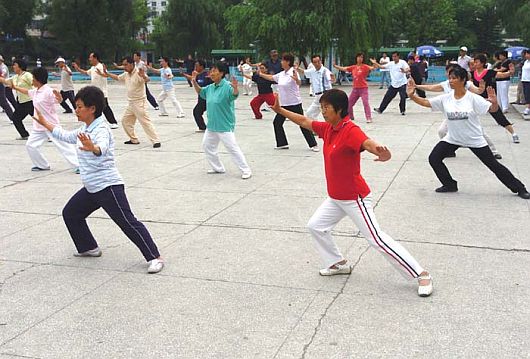
Quincy-Allen Jones presented last, proposing free exercise classes, such as Zumba, Yoga, Jazzercise, or Tai Chi to be held in public parks.  Quincy pointed out how these programs would not only help combat obesity, but would reduce depression levels with outdoor activity, increase the social capital of participants by increasing their social networks, and overall add to the city’s quality of life and likelihood of economic development.  Quincy proposed that college students seeking experience in teaching exercise classes could teach the classes.


Catherine Kennedy noted that in her capacity at SPAR, she sees how the city can be perceived as sucking the fun out of anything, but that the city is responsible for what happens in parks, and that the teachers would have to be certified.  However, she said, the city could work with students to get their certification and that could add to the motivation of students to participate; students may value becoming certified.  It was noted it might be possible to pay for people to be certified, but they could then teach thereafter on a volunteer basis, or perhaps could receive a $500 tax credit.


Dara Sanders noted that the programs could also take place at schools, where the facilities are present in the form of gyms, etc.  The program could work with Parent-Teacher Associations to apply for grants.  The Riverview Park was also noted as as possible locale.  Loren has noted before that China did well in having morning routines of Tai Chi throughout it’s country and communities would start their days exercising outdoors together.


Feico Kempff asked Quincy-Allen if he'd be able to recruit students, and if he had the time and wherewithal to do that.  Quincy responded that for this project, he’d make the time, and would love to make it happen.  Catherine said she’d like to talk more Quincy about the project.


GREENWAY DESIGNS PROPOSED BY LSU LANDSCAPE ARCHITECTURE STUDENTS
Loren reported that he and fellow ABS board member Ian Webb were very impressed by the set of proposals for greenways in Shreveport they had seen that morning.  They had been invited to view proposals by Dr. Bruce Sharky, professor of landscape architecture at LSU.  Several of the graduate students in one of Dr. Sharky's classes selected Shreveport as a site for designing greenway possibilities.  Loren and Ian were raving about them, so stay tuned to the blog.  We’ll be posting them next week!


ALL INVITED TO LAST BATCH OF STUDENT PROPOSALS NEXT WEEK
Also next week, on Monday the 10th, will be the last group of Centenary student presentations on the following topics:

  • curbside composting
  • exercise and nutrition free magazine 
  • student mentoring program
  • community gardening with the homeless
  • sidewalk improvement

The students are eager to receive feedback, and anyone is invited to attend.  Join us!

Sunday, December 2, 2012

Caddo Parish bike and pedestrian trail map; see new 2 mile route via widened road shoulders on N. Lakeshore Dr.

Article by the Times' Michelle Marcotte on 12.1.12.

North Lakeshore Drive is a popular spot for area cyclists, District 2 Caddo Commissioner Lyndon B. Johnson said.

Typically on Saturday mornings, he said, there are 20 to 30 bicycles riding along it.

Now, thanks to an ongoing Caddo project with a completed two-mile initial segment, those cyclists have a designated space to ride on the road.

And by this time next year, they could be enjoying the entire 17-mile path between Shreveport and Louisiana Highway 169, said Ken Ward, project manager for Caddo public works and engineering.

The development of a safe and attractive pedestrian and bicycling network integrated with vehicle transportation is one of the goals identified in the Shreveport-Caddo Master Plan.

Ward said each year the parish completely rehabilitates one of its worst roads. And when North Lakeshore Drive came up, he noticed the parish owns the right of way along the stretch and it could accommodate a bike path/shoulder.

The added space along the road not only would provide a safe place for cyclists to ride, but a shoulder for vehicles to pull over in emergencies.

In addition, once the path is completed, it would connect Richard Fleming Park, a 15-acre park on West Lakeshore Drive, and the 160-acre Walter B. Jacobs Memorial Nature Park.

"This is a monumental baby step," District 4 Caddo Commissioner Matthew Linn said.

The parish is able to build the bike path for far less than what the traditional cost is for this type of lifestyle improvement because Caddo already owns the easement, he said.

Ward said he would like to see more bike paths develop in other areas of the parish, particularly the south, where people tend to ride.

"There is a real need for this," said Ian Webb, owner of Red River Cycling.

In addition to leisure riders, he said, there is a big population of people who ride a bike to school, work or visit the store who could benefit from the designated bicycle path.

"This is something everyone can use whether it's for transportation or recreation."

There are no plans for new bicycle paths in Shreveport next year, city Public Assembly and Recreation director Shelly Ragle said. However, A Better Shreveport continues to work on a plan to create a network of bike paths and nature trails using drainage ditches, levees and strips of unused land in the city.

The group applied for a grant with the National Park Service, which connected it to a landscape architecture professor at Louisiana State University in Baton Rouge.

As a result, Bruce Sharky brought a few of his students to Shreveport last month to look at bike path and nature trail opportunities in the city. Demerath and Webb plan to visit Sharky's class Monday, when students will present their proposals.

"These proposals out of Baton Rouge are designed for Shreveport, and we're hoping to integrate them into a plan," Demerath said.

Bicycle and multiuse paths atop levees are becoming popular in south Louisiana.

Duane Foret, St. Charles director of Parks and Recreation, said his parish is building multiuse paths on top of its east bank levee along the Mississippi River. The east bank path — in its final phase — runs through the parish to connect to neighboring St. John and Jefferson parishes.

"On Saturdays, we probably have 20 to 25 vehicles at the (East Bank Bridge) Park who drove there just to bicycle on top of the levee path," he said.

St. Charles is funding the path with grants obtained through the Louisiana Department of Transportation and Development and matching funds from the parish, he said. It also has plans for a bicycle path on the west bank levee.

Foret was unsure if an economic or connectivity vision was the force behind initiating the multiphase project, as it started before his time. But he said it seems to have grown even with a potential plan being discussed to build a levee path between Baton Rouge and New Orleans.

"It seems to have grown from that first initiative."

In the Comments section:

James E Burian · Avionics Inspector at Metro Aviation
I like the idea of having the bicycle and pedestrian lane on N Lakeshore but it looks like it will increase the likely hood of accidents between vehicle and bike or pedestrian.

The lane looks like a narrow shoulder. I drive N Lakeshore almost every day. The speed limit there is 45 mph. Most vehicles drive faster than that. Some approaching 60 mph.

I would not feel safe walking or cycling right next to vehicles moving that fast. In my opinion it would be safer to have some sort of barrier between the bicycle lane and the road or have a grass median that separates the road form the lane.