
Mon at the ABS meeting I got a gift from Feico Kempff: a map of a newly ribbon-blazed Coates Bluff Trail extension.
Did not imagine I would be using it on Wed afternoon.
But I had an intrepid group of student nature trippers who said, "Is there someplace we could trek different from last time?" Having just come over the Monte Carlo bridge I thought, Why don't we tuen east and explore the Feico extension? We did it.
Twas a terrific adventure. We came out on the side of the construction site neat Stoner and Fant. We trekked over to the skate park, then back to Magnet. About an hour and 15 of walking. Best parts: the ridge above the slough, the bamboo forest, the pile of cross-trail logs over which we had to climb.
Happy students and teacher.
If you have not lately been on the Coates Bluff Trails - there are now 3 pathways - I highly recommend you slip out there. It is lyrical.

Wednesday, February 27, 2013
Hiking the newest section of Coates Bluff Trail, one marked by Feico Kempff this week


Sunday, February 24, 2013
A Better Shreveport bicycle advocacy fits ComFound, Blue Cross efforts to offset obesity

The fight against obesity in the Shreveport area has started, says KTBS. Healthy Green and into the Outdoors kicked off Saturday, and its goal is to get you fit. This comes after an announcement last year from the Blue Cross, Blue Shield of Louisiana Foundation that detailed an initiative to fight obesity.
"We want people to get healthy," Community Foundation Executive Director Paula Hickman said. "We want them to live environmentally sound practices, and we want them to get up and moving outside."
Her organization and others will promote healthy eating, exercise and green practices locally through several healthy living projects. The most important is the creation of community gardens around Shreveport. Hickman says obesity is an expensive problem in the area.
"Our community has about a 27 percent obesity rate, and that's costing us about $150 million a year," Hickman said.
More than a million dollars has been poured into Shreveport . . .
Read more http://www.ktbs.com/news/War-on-obesity-kicks-off-in-Shreveport/-/144844/19056468/-/rgh490z/-/index.html
Saturday, February 23, 2013
NLCOG Bike Path and Strategies for Changing Public Prayer Customs in Local Government at Next Meeting
The first topic at Monday's meeting though, will be NLCOG's new bike trail. If you're in favor of bike paths, bike lanes, etc. Come and discuss it with us.
And by the way, we'll have a guest from the press who'll be interested in your thoughts!
(Summaries of the last two meetings are coming; thanks for your patience!)
Friday, February 8, 2013
Gender Neutral Bathrooms and Public Prayer Discussed at Last Meeting
IDENTIFYING GENDER NEUTRAL BATHROOMS
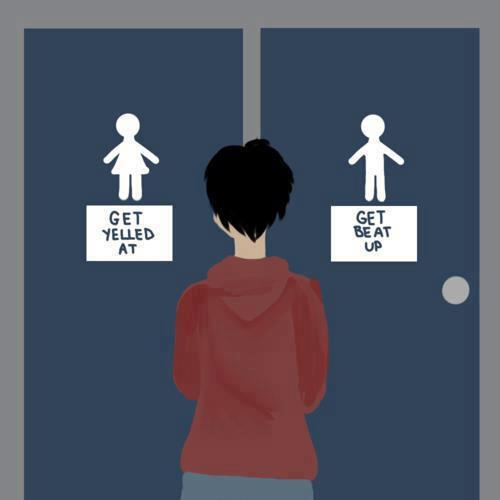
Sara Whittington is a Centenary student and member of the living-learning community “Node,” devoted to practicing social change through technology and design. The website safe2pee.org is the technology in this case, where people can type in a zip code and see the gender neutral bathrooms in the area. The group is also working on a design for gender neutral bathrooms symbol that isn’t “binary,” i.e., that doesn’t imply one is either male or female, masculine or feminine. Loren pointed out that research in biology, psychology, sociology and anthropology shows that gender is more complicated than that. (Many cultures in the course of history have had a third gender, a variety of sexual orientations have been accepted as well.)
It was noted that progress in including people can go in fits and starts. Carolyn recalled dance clubs back in Austin in the 80’s where the bathrooms were gender neutral.
Maurice says he sees single stall unisex bathrooms, and asked if we’re talking new construction for larger bathrooms? Loren said, not necessarily. At Earlham College in Indiana in 1980, he seems to recall that his dorm just relabeled gender specific bathrooms to be unisex and the urinals simply went unused. Carolyn said in some places they construct a partition for the urinal area.
 |
| Still "binary" based, but gotta love the text! |
 |
| At Colorado College's library |
 |
| Doesn't matter what that placard is covering up, does it? |
Along those lines, among the signs that were discussed, were “All Bodies Welcome,” and a circle with an arrow, cross, and equal sign (designed by Barbara Jarrell on the spot). Others featured here are from the Node blog.
It was noted that the mayor has acquired funds to install bathrooms at Riverfront Park. Perhaps he’d be willing to make one gender free. Other locations were thought of: George’s Grill is single stalled, Pierre Bossier Mall in the food court, the All Souls Unitarian Church Office, Target and Walmart both have family bathrooms that could be converted with signage. (It was noted that in such busy places, people object, saying that the priority should be for dealing with babies and accompanying children, but if they’re heavily used enough to cause those complaints, it shows a need for gender neutral bathrooms to be established in some way that doesn’t affect families negatively.) Certainly, someone said, there are plenty of gas stations with single stall mens’ and womens’ that could be converted to just two unisex bathrooms. It was countered that men tend to be less clean in theirs, though maybe they’d be cleaner if it was unisex.
 |
| (But no clue with the colors mean) |
All of those subtleties to making progress aside, there is a need in Shreveport-Bossier to identifying single stall bathrooms that could be interpretted as unisex and therefore gender neutral, and enter them in safe2pee.org. ABS folks are encouraged to email Loren with locations and he’d be happy to enter them.
Victoria, who teaches at Magnet High School, talked about students who have gender identification issues. Could this raise awareness of gender ambiguities and increase resentment against those people? Carolyn disagreed and said the child is likely already being bullied. Barabar said if you just put up the signs unannounced, before any discussion, people may just accept it.
It was asked what the priority is for Node, and for us in ABS: having a bathroom or having a progressive symbols done first? It was thought the former should be the priority. It was noted that they used to have bathrooms for African Americans and European Americans here.
PUBLIC PRAYER
The group discussed public prayer in local government. Loren said he’s been dismayed when prayers end “in Jesus’ name.”
Lani noted there was a woman who’d objected to reindeer being displayed on public property, but others said many symbols can have religious associations without being actually religious.
Loren mentioned the more inclusive endings used at President Obama’s recent inauguration: “In In Jesus’ name and all who are right and holy,” and simply, “In your name.” Loren also mentioned how the Chaplain has ended invocations at Centenary, “In the name of all that we hold sacred.” Barbara said at some Interfaith gatherings the leader will say: “take a moment to pray in your own tradition, after which I will pray in mine.” She’s also heard, “Pray in the name of the one who loves us all.”
A TYRANNY OF THE MAJORITY?
It was noted councilpersons would probably like to disagree with us on this and to win votes in their constituencies. It would also give them free media time for their campaigns.
Loren asked if this amounted to a tyranny of the majority, then? The response was that it was. Loren said it was too bad, since it marks Shreveport as non-progressive and unwelcoming of diversity, and that won’t help a community grow, at least not this day in age.
NEWS STORY ON SMART GROWTH
On the positive side, Loren mentioned he’ll be interviewed next week for a story on smart growth, and discussed with the group what places he should suggest they visit with the reporter doing the story. Maurice noted we need to describe how residents living right near the retail at 70th and Youree can’t walk or bike there. He described the retail spaces as islands floating in oceans of car-only terrain. Maurice said the places out past the grid neighborhoods of Highland and South Highland are where they really need bike-ped infrastructure.
Carolyn talked about the need for bike lanes downtown. It was noted that the presence of bike racks is going to change the attitude downtown. The head of Brookshires was grateful that Maurice told them to move it out so bikes can fit on both sides.
Addressing sprawl should be an issue in the interview. Outer developments want our water and sewer services but the tax base doesn’t pay for itself.
It was noted an objective for the city should be to decrease rental and increase home ownership. There are programs such as HAPI that work to that end. How to raise income levels is the issue, and to fix infrastructure is part of the key.
Sprawl thins our resource budgets though. Dara said that impact fees is what the developers should pay: a big chunk to compensate for the infrastructure improvements that their building are going to demand.
In Douglas County Colorado, Victoria mentioned, outside of Denver, they had to build all the infrastructure completely built before they gave the first housing permit.
The parish seems a step ahead of the city in terms of shaping a healthy built environment. For example, last year, resolution 182012 in the parish required planning for a bike-ped plan.
Kathryn and Cynthia have each taken a turn graciously hosting our monthly social meetings at their respective houses, and this Monday will be Loren's turn. He's at 115 Atkins Ave. BYOB or nibbly, or just yourself!
Sunday, February 3, 2013
Gender Neutral Bathrooms, Public Prayer, Trails, and Urban Planning, All Topics at ABS Meetings
At the next meeting on Monday the 4th, the following topics are on the docket (though anyone is free to add to the agenda):
- Sara Whittington will speak to the group about Centenary’s gender neutral bathroom project, and ABS’s potential for helping make it city-wide.
- Loren Demerath will suggest that ABS propose to the City Council that it use a universally inclusive prayer format. The form that is now typically used is not inclusive, often being: “In Jesus’ name, Amen.” (Loren wonders if the invocation performed at President Obama’s recent inauguration might provide a model: “In Jesus’ name, and the name of all who are holy and right we pray. Amen.” Or, maybe just “In the name of all that we hold sacred, Amen.”)
- reports on bicycling parade route as improvised “Cyclovias,”
- news on downtown development or the dog park
- opportunities for trail development--Coates Bluff and elsewhere
- strategies for shaping the unified development code.
COATES BLUFF AREA CONSTRUCTION
Feico brought his ma.and described the new Magnolia Charter School, and the apartments at Riverscape (its Phase 1 of construction), and the Coates Bluff apartments also has slabs down and apartments.
COATES BLUFF TRAIL REFINEMENTS APPRECIATED BY SCHOOL CHILDREN
Maurice has repaired the bridge at “Monte Carlo”. Over two weekends he worked to repair it. He said the problems were probably caused by too many people on it at one time, but it’s now stronger than it was.
Lani asked if people can help. Maurice said trails always need maintenance and beseeched us all to groom as we go and clear things that have fallen. He customarily carries clippers...
Later in the week Loren ran into Jon Soul who said that day he’d taken out a whole class of his early elementary aged students on the whole larger loop of the trail for the first time. He said the kids loved it, one saying something like, “This is like a whole amusement park out here!” Loren remarked that children are often better bellwethers of the beauty of nature than adults, who are less accustomed to being outside, without creature comforts, and enjoying things that aren’t marketed to them as entertaining.
The group described to Lani how the Coates Bluff trail emerged as a product of the leadership of Jon Soul, Montessori Director of Outdoor Education and ABetterShreveport member, s, and Montessori parents under the leadership of Jon Soul, and more recently Centenary students during last year’s “Big Event”. Lani then talked about Pinehill Park (.org) in Rutland, Vermont. She said it started out by people making their own trail, and as folks used it, it got better and now there are several races up there annually, it’s adjacent to ballfields, and used quite a lot. We told Lani about Shreveport’s beautiful Stoner boat launch area bike trails complete with carpeting to prevent erosion and set up with obstacles on the inland trails. The trails go all the way down to the Jimmy Davis bridge. Meaux rode them the other day. (He actually used a car to get his bike there. M. noted that every three times he starts his car he needs a new inspection sticker!) Maurice said most of those trails were made before mountain bikes by dirt bikes, and he used to drive a dune buggy in there. They’re more narrow now.
IDENTIFICATION OF GENDER NEUTRAL BATHROOMS HELPS GENDER DIVERSITY
The group discussed the project of Centenary’s living learning community, “Node” to facilitate gender neutral bathrooms.
 |
| Symbols indicating unisex toilet |
 When
asked why this is an issue, Loren explained how people can get harassed
and feel uncomfortable in bathrooms if they aren’t expressing the right
kind of gender. This may not be a problem for most people, most of the
time, but small adjustments can eliminate the problem altogether.
When
asked why this is an issue, Loren explained how people can get harassed
and feel uncomfortable in bathrooms if they aren’t expressing the right
kind of gender. This may not be a problem for most people, most of the
time, but small adjustments can eliminate the problem altogether. It was noted that now many family bathrooms would qualify as gender neutral. Parents and grandparents can be in awkward situations, worrying about kidnappings, abuse, etc., and want to accompany their charges.
Plus, Loren noted, it’s more efficient. Lani noted how when Denver International was being built there was a movement to make twice as many bathrooms for women because they take more time. A move to more gender neutral bathrooms would reduce that inequity. Maurice noted how portalets used to be labeled male and female, but that changed once we realized it was basically the same, and women ended up waiting longer than men. Now, portalets tend to be gender neutral.
Loren described Safe2pee.org’s effort to identify gender neutral bathrooms by location, such that people can enter the zip code and find the nearest bathroom that’s gender neutral. Many single toilet handicapped bathrooms would qualify as gender neutral; and, many single toilet bathrooms in gas stations could also easily be relabeled as gender neutral, i.e., “unisex”.
(Sad you missed this interesting discussion? We’ll continue it this week for the first 15 minutes of the meeting. Sara Whittington will have to get to class at that point, but until then she’ll be telling us the project at Centenary, and we can ask her about how we can help identify bathrooms city-wide.)
CENTENARY BAND SHELL A SITE FOR MEETINGS, DRUM CIRCLES, YOGA?
Maurice noted that there may be bathrooms behind the bandshell, and if those bathrooms are open, we could have meetings there. It was noted it could also be a great place for drum circle or yoga.
In discussing Centenary student Amanda Hock’s proposal for rennovating the shell, it was noted that the benches are old and the concrete has worn down over time and become rougher.
Maurice wishes they’d do the band series in the milder months because it’s got thermal mass that soaks up sun. If they were sprayed with something “albedo” (white) it would be less hot; stadium seats or yoga mats could be used too.
HOPED THAT DARA SANDERS GIVEN REINS TO GUIDE UNIFIED DEVELOPMENT CODE
The group de-briefed on our meeting with Dara Sanders.
It was noted and if they give Dara the reins we’d be happy for her to have them; but will the good ol’ boy groups give those reins. To this point the city’s development has been largely at the whim of developers who are able to negotiate a zoning decision making process that is based on a minimalist, outdated Master Plan. Hence, our sprawl, neglected downtown, abandoned properties, and lack of walkability and bikeability. (The Caddo Parish Commission, though, has made admirable strides recently; witness the various steps described by Commissioner Matthew Linn on that day’s “Time for ABetterShreveport” radio show with Carolyn Manning.)
Here’s hoping the one person in city government who is professionally trained and experienced in urban planning will be given the power by city officials to help us. It’s promising. Members of the City Council have been as suitably impressed with Dara as ABS has. And the rest of the city is getting a chance to see that too. In a recent article in the paper Dara was quoted on the priorities of the unified development code and what it can do for the city.
It does seem as if the code is a chance to influence the city’s decision makers and residents, and increase awareness about what’s possible for Shreveport.
OUTSIDE VIEW NECESSARY FOR ANY CITY IMPROVEMENT
Maurice asked if they want the new development code to be unique, why go outside to get a consultant? Lani and Cynthia noted that a consultant would be neutral, and Maurice agreed, also saying they’d be persuasive. The uniqueness comes any city’s unique topography, industries, college town nature (or not--as in our case), the kind of river or water bodies it has (the Red River ain’t the Mississippi, etc.).
It was noted that ABS has consistently been energized by people who’ve arrived or returned to Shreveport from outside and have brought fresh ideas. The dog park came from a women from Austin, Lani’s noted on Rutland, Vermont, Maurice describing Cyclovia in Bogata, Colombia, Garrett Johnson on bicycle coops in Boulder Colorado, Loren on linear parks in Quito, Ian Webb on greenways in Roanoke, Kathryn Brandl on trails in Minneapolis, Jon on trails in Los Angeles, Carolyn Manning on downtown revitalization in Grapevine, Texas... we could go on and on!
DOG PARK’S INTERESTS HELD SECURELY
Matthew Linn was a guest on the radio show that night. He’s told Cynthia that the money that the Parish received from Red River Waterway Commission is being held in a trust fund by the Parish. Cynthia will follow up with Michael Corbin and pursue the issue again. The council has taken action, as has the Mayor, so if nothing happens it seems like we have to wait now.
NAKED BEAN HAS BIG NEW SPOT
ABS has long noted the importance of “the public realm” in creating a sense of community, increasing the quality of life by providing opportunities for socializing, public performances, and civic discourse. Coffee shops and cafes (not to mention bars, barber shops, beauty salons, dog parks, swimming pools, or any place where people can come together and socialize) are often mentioned as important for that. Many cities that rank high in quality of life have active “scenes” in that regard. And so, ABS has always rooted for places like the Naked Bean. One special feature it has is a performance space. Their new location, near the corner of Highland and Kings, features more space than they’ve had previously.
THE BONEDIGGERS TO PLAY AT THE NEXT DOG PARK FUNDRAISER
March 8th, a Friday, will be the date of the next Dog Park fundraiser. It’s entitled “Throw Me A Bone,” taking off on the name of the band that will be playing, “The Bone Diggers”. It will be at Mojo’s, which is catty corner from The Blind Tiger. The dog park fund will gets whatever people donate at the door. (There are some PG rated games that will be played, btw, with bones as a theme--now you know. Come to the next meeting and Cynthia will hilariously describe them for you!) Doors open at 7:30, band starts at 8:00.
Join us for our next weekly meeting, Monday the 4th, 6:00-7:00 p.m., at the Wright Math Building on Centenary’s campus. All are welcome!
Wednesday, January 23, 2013
A New Unified Development Code Stands to Bring Revenue and Retail
Our discussion started with Lani asking Dara about the city’s policy of annexation, and whether it was growing too fast to support itself. Dara said that Shreveport is slowly swallowing up the property within the Parish. Her job is partly to inform the decision makers that the Master Plan is critical of our annexation practice, which causes us to grow beyond what our population can support. Property owners petition for the city to annex, but then we end up taxing a water and sewage system that isn’t designed to support that residents at that location. Lani asked if annexees can be asked to support it, noting that sprawl and annexation doesn’t pay for itself. Dara said it’s true that the cost to the taxpayer is not zero; additional employees need to be hired and officed. The cost of annexing is zero at this point in time, in terms of buying property, but is not zero in terms of services such as school bus travel, law enforcement travel cost, park costs, water and sewer service, etc. Impact fees are now being computed in ways that can be defended in court.
 |
| A new code would help us get retailers we're missing out on |
Maurice pointed out that it’s hard for politicians to turn away from the potential increase in the tax base. He said they may know they shouldn’t annex, but it’s so hard to resist the temptation “to grab the cheese that’s sitting on the table right there in front of them.” More expensive houses that would be appraised and taxed at a higher value mean more revenue for the city. But the fact is that, in the long run, the revenue isn’t enough to pay for the services.
Dara hopes that creating an annexation policy will help to curb that annexation practice. With more education over time, we’ll get there, where we’re not so tempted annex property. The policy can discipline the decision-makers. Once criteria are established and a policy is approved, the public can thereafter hold the city accountable to annexation and sprawl. Right now there’s no such policy, and Dara hasn’t seen a decision yet NOT to annex.
As a result, we’re the largest city in the state square mile wise. Our population growth has been stalled for 40 years, but in that time we’ve doubled in area. It’s also why we have so many empty properties in the interior of the city. Developers are allowed to move out. “While the planners are away the developers will play,” Maurice noted.
Dara said Shreveport has been just zoning enforcement, not planning. Those codes came from the 50’s, and back then our current notion of optimal mixed-use zoning that creates density was an anathema to 50’s modernist planning. Loren (apologizing to the group for being a nerdy urban sociology professor who couldn’t help but take advantage of this conversation with a smart young planner) asked if those old codes weren’t based on Le Corbusier’s urban utopia of that compartmentalized city functions with the emphasis on city-wide efficiency. Dara said, yes, that it was the “Euclidian” approach to zoning: the separation of uses. She noted it had understandable origins: before zoning we saw factories go up next to houses and schools and that was offensive, so we had a knee jerk reaction to it by separating uses. But the cars allowed us to sprawl and “let out the belt,” (in more ways than one, it was noted).
Lani asked if the traditional town form and revillaging hasn’t been around for a long time. Dara said it has, but not all cities and states have been equally progressive Houston had an open annexation policy, for example. Feico noted that Spokane went back and forth between the strong mayor and city management formats, and they’ve had a no-growth policy.
Dara noted that our Master Plan is focused on filling in the vacant and neglected areas within our boundaries, but we have no way of enforcing it.
Dara said a huge step in that direction is the city’s hiring of a lead consultant to research the possibilities of creating a unified development code. Creating such a code would be a huge step in Master Plan implementation. Dara has estimated that 67% of the short term goals are dependent on the unified development code. The consultant’s team will look at the 1950’s zoning and development regulations, see what we can keep and what we need to add. For example, we may well want to add a tree ordinance, something to reduce the heat island effect of parking lots, to increase the use of bioswales and alternative water treatment techniques, to have bike racks be required for developers to install, to require private improvements to public infrastructure such as streets and sidewalks.
 |
| Another new code benefit: drainage ditches to greenways |
The cost of the unified development code will be about $450,000. When asked about doing it in-house vs. via consultants, Dara noted that there is a value to having an outside, objective, equitable approach, and that their view will be valuable. We have three bodies that need to approve it, and Dara alone wouldn’t have the power and punch to get it approved. That said, Dara has done this kind of work in Fayetteville, including a huge overhaul of regulations and many other things the staff was trusted to do and for which it was given administrative approval. But, it was noted that cities are different; Fayetteville is a university town, etc.
SHREVEPORT IS THE LARGEST CITY IN THE STATE (COUNTRY? UNIVERSE?) WITHOUT A UNIFIED DEVELOPMENT CODE
But Shreveport is overdue. It was noted we’re the largest city in the state that doesn’t have a unified development code. Such a code specifies uses and regulations; things like outdoor lighting, music, vendors, street and sidewalk improvements, drainage regulations, etc. Importantly for developers, everything would be in one place. Feico said, you know who’d like that would be stores like Macy’s. The review process would be more predictable. We don’t meet the numbers for Whole Foods, but neither did Detroit, and they got one and we see the effects of that; residences popping up around it, etc. Strong retail services can work to be an anchor for downtown redevelopment, but they want predictable approval, not an unorganized, haphazard, arbitrary review process.
 |
| A new code would help new grocers, help downtown |
At the beginning of the meeting Dara and Loren had chatted about how contemporary urban planning is much more responsive to the character and desires of individual communities than the old top-down model. Where previously an architect would deliver a plan that he’s constructed from his own vision, currently a planner develops a plan that reflects the character of the community she has met with and researched. As a result, Dara noted that this new uinified code would respond directly to the neighborhoods that currently exist. The planner looks at what’s there and assesses what’s different or appealing about each neighborhood. The the planner works to preserve that character and allow for compatibility and consistency in the neighborhood. For example, the planner can allow for things like accessory dwellings, like an over-the-garage apartment, or non-residential uses such as the corner grocery store in a neighborhood. Right now we limit the number of accessory structures; only one now and only a certain square footage. That’s unusual. A lot of cities will limit the percentage of space, but not the raw number. Sometimes our current codes are over-regulating and are limiting people more than they need to, and that’s one of the things that will be researched by the consultant team.
Dara gave some other examples of where our codes need revising, such as the fact that we allow for asbestos manufacturing in one area. “Are you frigging kidding me?!” ...said one.
Susan Keith asked, “What’s the best way to get this done and approved?” Dara said that for the past eight months she’s been meeting with neighborhood groups and government officials trying to educate people about what a unified code is, and why we need one. The city will be paying for 75% of it, and the Parish for 25%. Dara has been going through the applications for lead consultant and said we’ve received four that are very impressive. The MPC staff will then help the consultant build the rest of their team from local professionals. They’ll need engineers who know how to build with materials that are sensitive to the environment, arborists who understand our trees, landscape architects, etc. One of the questions Dara often gets is why we can’t just adopt Lafayette’s or Baton Rouge’s unified development code, but because we’re different in our region, industries, etc., doing that wouldn’t be effective; each city needs a code that fits it.
The code will need political support to be approved. So far it’s got the mayor’s support. Dara’s education campaign also helps. And it will help the more people get involved in the code’s development, just like folks did during the Master Plan’s development. Recently, Dara presented at a meeting just ahead of the head of the Shreveport Caddo Economic Development Authority (SCEDA) presenting. That person said he was glad to hear Dara’s presentation because it will make economic development easier for SCEDA.
Loren asked about how Detroit got a Whole Foods, and Dara said it was through an incentive package. She said, look at the car manufacturer we got, the steel industry we’ve gotten; they received competitive packages to lure them here. But, we have to get control over our sprawl and our vacant properties first. If we can get a handle on our disinvenstment and sprawl, than we can have appeal.
Feico mentioned that Centenary (where we are meeting) like many other Shreveport organizations, would be interested in creating a unified code of development. As things stand now, it can’t change any of the land structures around it. This is the motivation for smaller scale codes, where larger scale codes fail: if Centenary’s area were controlled like a village, there could be regulations crafted just for it.
The main action Item for ABS will be to publicize the need for this. We’ll be inviting Dara to come on the radio show and talk about the new code, and about the need for Shreveport vote for it.
So, BE READY TO PARTICIPATE IN THE PUBLIC PROCESS! There will be lots of meetings, and anyone can participate in an as many of them as they like, not just in the ones in their neighborhood. As with the Master Plan, this is a chance to lobby for the city we want! Might as well, right?!
Monday, January 21, 2013
Thanks Sent to School of Landscape Architecture, and Thoughts of Racism on Martin Luther King Holiday
Thought I would share this note of thanks below that I just sent to Landscape Architecture Professor Bruce Sharky. (I hope ABS Board Members don't feel I overstated things.)
As I wrote the last lines on this MLK Holiday, I wondered, is the racial inequality and subconscious racism endemic in all us an obstacle to fully embracing greenways for a better Shreveport? I'll talk about that on the radio show today on 91.3 at 5:00 p.m. Feel free to text me at 840-9703 if you have any comments or questions I could mention on the air.
Dear Dr. Bruce Sharky,
As you know, I am the Executive Director of ABetterShreveport.org, a non-profit organization dedicated to discussing quality of life improvements for Shreveport. I am writing to express my organization's deepest gratitude to you and the members of your graduate-level class in greenway design, for their work on proposals for Shreveport. Those five students produced a remarkable quantity and quality of work that our organization is now using in our city to further the dialog for creating and implementing a plan of a network of greenways.
We have posted the proposals on our blog, and have also held a meeting dedicated to discussing them. We plan on developing our home web page to include links to these proposals that will serve as more permanent homes for the projects. We also plan to use the proposals as a basis for presentations to the City Council, the Parish Commission, and the Metropolitan Planning Commission with the goal of obtaining the support of those bodies for developing a greenway network plan.
My trip from Shreveport to Baton Rouge with fellow board member Ian Webb to view the proposal presentations was, we both agreed, well worth it. We were inspired, and our awareness of the potential of greenways for our city was vividly enhanced. I have reiterated to my organization in meetings, and to the wider community of our blog readers, your message of Shreveport's unique opportunity to transform itself. When I tell them an internationally recognized expert in greenway design told me he has never seen any city with drainage canals as amenable to conversion into greenways as Shreveport, and how that will reduce the cost of the project by an order of magnitude, they are duly impressed! And, as people are made aware of the benefits of greenways' nature trails and bicycle paths to health, recreation, economic development, and general quality of life, and they see how your own designs have already transformed places like Anchorage, Alaska, they tend to want to change Shreveport in the same way.
As part of our gratitude for the work you and your students have conducted, including your own 9 hour round-trip drive to Shreveport from Baton Rouge with the students, we promise we will do our best to leverage these proposals into generating support for a greenway network plan and its implementation, for the good of our city, our region, and our state.
Again, thank you so very much!
Sincerely,
Dr. Loren Demerath
Executive Director
ABetterShreveport.org
2911 Centenary Blvd.
Shreveport, LA 71104
office: (318) 869-5161
fax: (318) 869-5795
Sunday, January 20, 2013
Last Two Meetings Detailed, and Chance to Query MPC Planner Monday!
That led to the comment that a number of cities have more amenities than us, like dog parks, which are common elsewhere. Kathryn was in San Diego at a mathematics conference and happened to be walking in a mall. There, lo and behold, she saw a dog park, right in the middle of the mall!
Cynthia noted we have a winery and vineyard coming on Greenwood Road. There’s another one called “On Cloud Wine” on Bunkham Road. They’ve planted a bunch of muscadine and are waiting for them to produce. They’d been bringing in grapes in the meantime, but you have to producing a certain percentage of your own grapes to be a considered vineyard.
It was noted that many people don't realize the funding includes more than just a dog park: it provides getting drinkable water there which makes it a more useful public gathering area for all people, dog owners or not. Feico said he avoids calling it a "dog" park because it serves people. Cynthia said Pam Atchison of SRAC visited her mother in Euless TX, where she is mayor; while there she showed Pam their dog park. Pam went on about it how great it was for pet owners to socialize, she focused more on the people than the dogs! She said she now gets it! Pam said she realizes now that the preliminary plan for pup park in the Shreveport Common may be too small. They see now how it can be popular and a big draw for people, and a larger dog park can give the Common more bang for the buck. Their current plan is to position it on the Texas Ave. side of the railroad tracks.
Cynthia’s thinking has been, that if we can start building the one at Hamel Memorial Park, we could start on one at Princess Park.
Unfortunately, the Mayor’s lack of action is holding up donors and volunteers. If people give in to waiting out the last term of Mayor Glover, it could be four years--two years AFTER the next mayor takes office that the park gets constructed!
Councilman Michael Corbin said all parties should sit down and revisit the dog park issue. The Mayor hasn’t said explicitly what the greater priorities and needs are, and it may be hard for him to say since this is money that HAS to go to riverfront improvements. People don’t understand that when they talk about roads, schools, and other parks being greater priorities--it can't go to those things--but the Mayor hasn’t corrected people on that misperception.
It was noted that it seems odd that the Mayor accepted funding from the Red River Waterway Commission for Riverview Park, but has turned down funding for Hamel Memorial Park. The Mayor got the half million dollar bathroom and half million dollar stage cover he requested. But at Hamel’s there’s nothing, and the dog park funding is less than half the cost of either of the Riverview Park projects, and has been supplemented by thousands of volunteer hours, signatures, and dollars in private donations.
But, ABS is trying to stay optimistic something will be worked out. We know Mayor Glover can be a creative problem solver, and we trust that he has the best interests of Shreveport at heart.
Feico said he thought the use of consultants is due to a lack of staff. They get squeezed down by taxes being cut that would otherwise fund more positions. Loren speculated that this means the city is forced to go the expensive route for consultants because we’re not willing/able to pay for a full planning staff, a bit like how it’s always cheaper to own than rent, if you can afford it. Feico noted that if our city government weren’t based on a strong mayor system, the MPC would develop a staff focused on planning, instead of doing just want the mayor wants. Maurice said it’s a piecemeal approach, each zoning case responding to developers, religious leaders, etc., on alcohol sales (a bulk of their work). It’s having a tenured MPC Board as opposed to two year terms appointed by the City Council or the Parish Commission.
Maurice noted that the other significant portion of MPC’s work is code enforcement issues is generated by complaints by neighbors. Feico said they have special officers devoted to code compliance in middle-to-low income neighborhoods. An example at the other end is how there’s been an argument over a commercial development on Ellerbe Road and local residents have been against it because of wanting keep the trees in the area.
BOARD MEMBERS REMINDED TO RENEW MEMBERSHIP THROUGH BOARD DUES